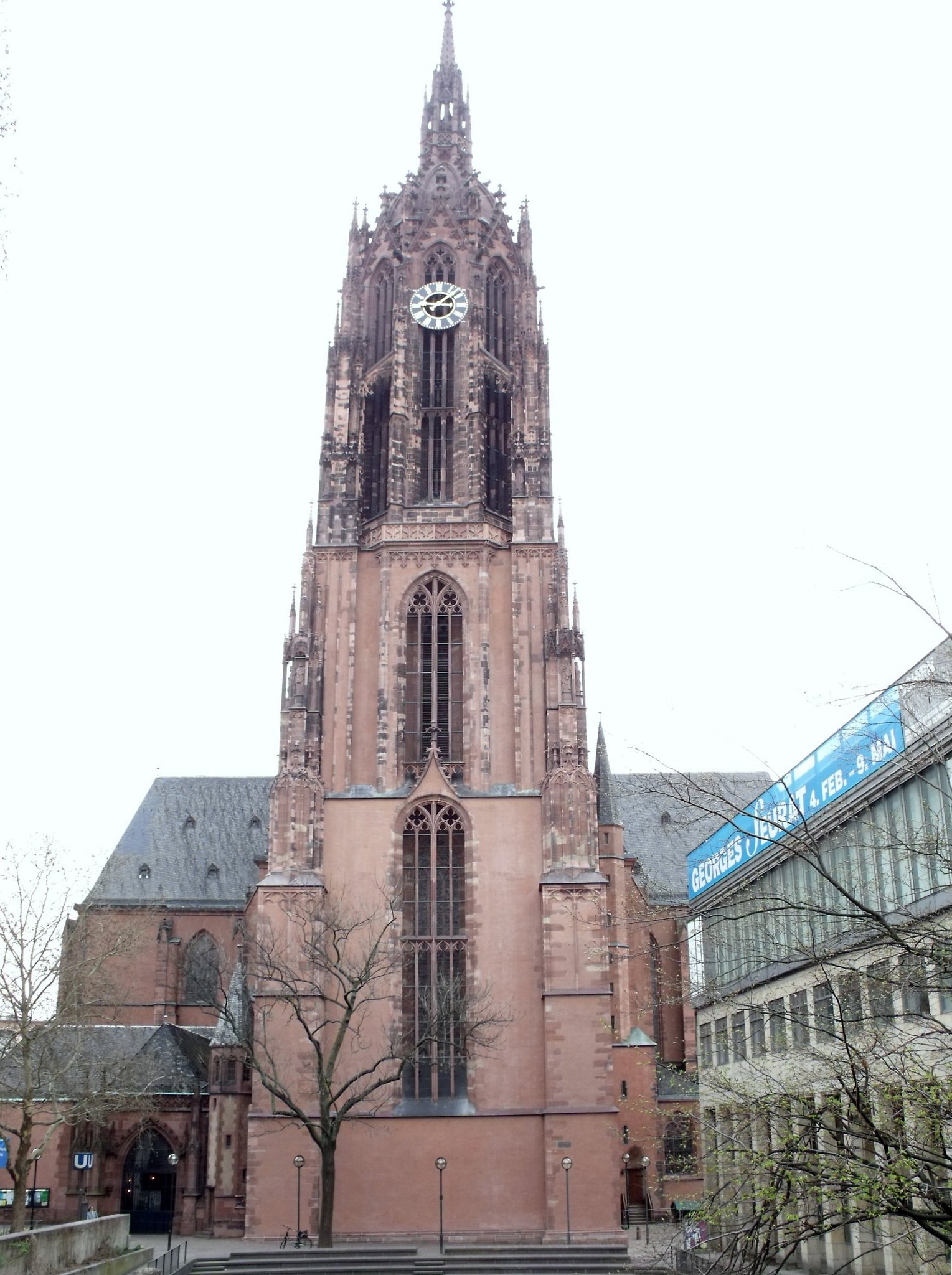
Nestled in the heart of Frankfurt, Germany, St. Bartholomew’s Cathedral is a testament to centuries of history, art, and faith. This magnificent Gothic structure, known locally as “Kaiserdom” or Imperial Cathedral, has been an integral part of the city’s landscape since the 14th century.
The cathedral’s origins date back to the Merovingian era when a small chapel dedicated to St. Bartholomew was erected on the site. Over time, this humble structure evolved into the grand tower we see today. The current building, constructed between 1315 and 1358, replaced an earlier Romanesque church destroyed by fire.
Towering at an impressive 95 meters, the cathedral’s distinctive red sandstone facade and soaring spire dominate Frankfurt’s old town skyline. Its architectural beauty blends Gothic and Renaissance styles, featuring intricate stonework, ornate sculptures, and stunning stained-glass windows that captivate visitors worldwide.
As you approach the cathedral, you are immediately drawn to the western tower, an iconic element added in the 15th century. This addition enhanced the building’s aesthetic appeal and served a practical purpose, housing the church bells and providing a vantage point for fire spotters to protect the city.
Stepping inside, visitors are greeted by an awe-inspiring interior showcasing medieval craftsmanship’s pinnacle. The nave stretches 48 meters in length, its vaulted ceiling supported by massive pillars that seem to reach towards the heavens. Sunlight filters through colorful stained-glass windows, casting an ethereal glow across the stone floors and illuminating centuries-old artworks.
One of the cathedral’s most prized possessions is the Crucifixion Group, a masterpiece created by Hans Backoffen in 1509. This sculptural ensemble, depicting Christ on the cross flanked by Mary and John, is a powerful representation of Renaissance art and remains a focal point for worshippers and enthusiasts alike.
The cathedral’s historical significance extends beyond its religious function. It served as the coronation site for Holy Roman Emperors for centuries, earning its imperial moniker. From 1562 to 1792, ten emperors were crowned within these hallowed walls, cementing St. Bartholomew’s place in European history.
Visitors can explore the cathedral’s rich past in the on-site museum, which houses an impressive collection of liturgical objects, vestments, and relics. The museum offers a fascinating glimpse into the cathedral’s role in shaping Frankfurt’s religious and cultural identity throughout the ages.
For those seeking panoramic views of Frankfurt, climbing up the tower is necessary. After ascending 324 steps, you’ll be rewarded with an unparalleled vista of the city’s modern skyline juxtaposed against its historic old town – a breathtaking reminder of Frankfurt’s evolution from a medieval trading hub to a contemporary financial center.
St. Bartholomew’s Cathedral has weathered numerous challenges throughout its long history. It survived the tumultuous years of the Reformation and escaped major damage during World War II despite the widespread destruction inflicted upon Frankfurt. This resilience only adds to its allure, making it a symbol of the city’s enduring spirit.
Today, the cathedral plays a vital role in Frankfurt’s spiritual and cultural life. Regular services, concerts, and events attract locals and tourists alike, fostering a sense of community and preserving age-old traditions.