
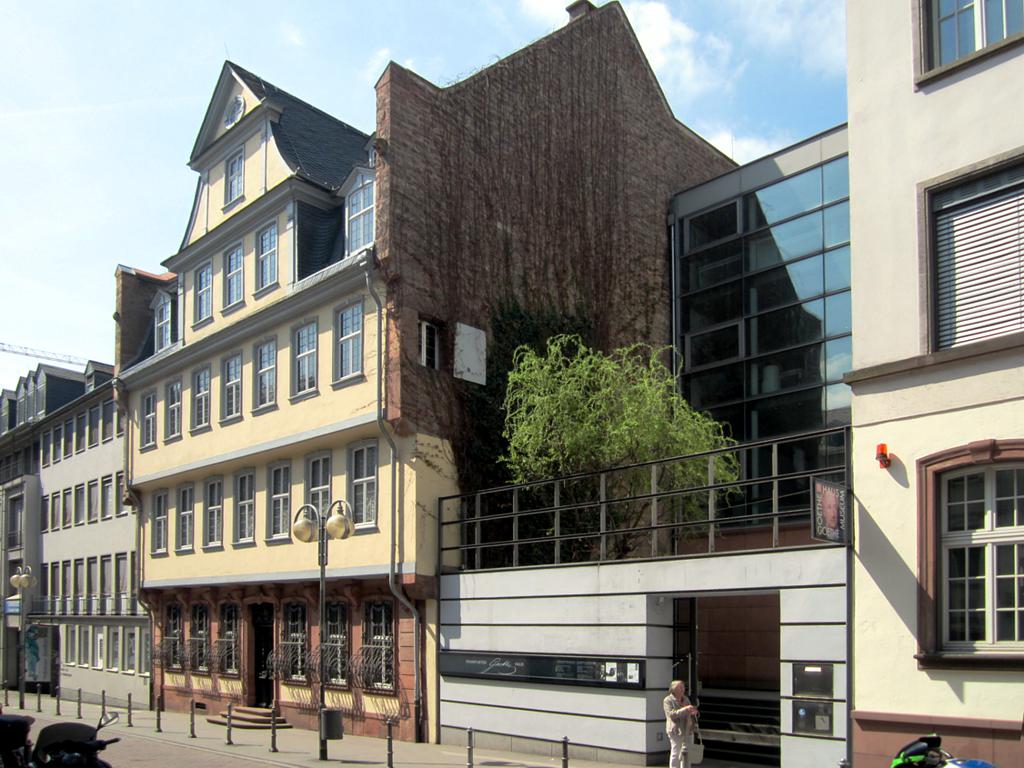
Nestled in the heart of Frankfurt’s old town, the Goethe House is a testament to one of Germany’s most celebrated literary figures, Johann Wolfgang von Goethe. This beautifully preserved 18th-century residence offers visitors a unique glimpse into the renowned poet, playwright, and novelist’s early life.
Born in 1749, Johann Wolfgang von Goethe spent his formative years within these walls, surrounded by the intellectual stimulation provided by his family’s extensive library and art collection. The house, a fine example of Baroque architecture, has been meticulously restored to its original state. It allows modern-day visitors to step back and experience the ambiance that shaped young Goethe’s creative mind.
As you approach the Goethe House, its distinctive red sandstone façade immediately catches the eye. The building’s four stories rise proudly above the cobblestone streets, inviting curious onlookers to explore its rich history. Upon entering, visitors are greeted by knowledgeable guides who offer fascinating insights into Goethe’s life and works.
The tour begins on the ground floor, where the family’s living quarters are located. Here, you’ll find the spacious kitchen with its original hearth and an impressive collection of copper pots and pans. The adjacent dining room showcases elegant period furniture and intricate wall decorations, vividly depicting upper-middle-class life in 18th-century Frankfurt.
Ascending to the first floor, visitors encounter the heart of the Goethe family’s intellectual pursuits. The library, filled with floor-to-ceiling shelves housing an extensive collection of books, is a testament to the family’s commitment to learning and literature. Here, young Goethe first developed his passion for reading and writing, laying the foundation for his future literary career.
The second floor houses the private chambers of Goethe’s parents, Johann Caspar and Catharina Elisabeth. These rooms offer intimate insights into family life during the 18th century, featuring period-appropriate furnishings and personal effects. Of particular interest is Goethe’s mother’s writing desk, where she penned numerous letters to her son during his later years away from home.
The tour culminates on the third floor, where visitors can explore Goethe’s room. This modest space, bathed in natural light from dormer windows, served as the young writer’s sanctuary. Here, he penned his earliest works, including poems and plays, that would later contribute to his literary fame. The room has been carefully reconstructed based on Goethe’s descriptions, providing an authentic representation of his creative environment.
Adjacent to the main house, the Goethe Museum provides additional context to the writer’s life and works. Visitors can explore a vast collection of manuscripts, first editions, and personal artifacts related to Goethe’s literary career. The museum also hosts temporary exhibitions focusing on various aspects of Goethe’s life and his enduring influence on German literature and culture.
For those seeking a deeper understanding of Goethe’s early years, the Goethe House offers guided tours led by expert docents. These tours provide in-depth explanations of the house’s history, architectural features, and the significance of various rooms and objects in shaping Goethe’s worldview.
Literature enthusiasts visiting Frankfurt should not miss the opportunity to explore the nearby Goethe Monument in the Goethestraße. This imposing statue, erected in 1844, pays homage to Frankfurt’s most famous son and serves as a reminder of his lasting impact on German culture.
The Goethe House is more than just a museum; it’s a portal to the past, offering visitors a chance to walk in the footsteps of one of Germany’s greatest literary figures. From the meticulously restored interiors to the wealth of historical artifacts, every aspect of the house contributes to a deeper understanding of Johann Wolfgang von Goethe’s formative years and the environment that nurtured his genius.