Sachsenhausen stands as one of Frankfurt’s most beloved districts on the Main River’s south bank. This historic neighborhood, renowned for its cobblestone streets, traditional architecture, and vibrant atmosphere, offers visitors a unique glimpse into the heart of Hessian culture.
Sachsenhausen’s roots trace back to the 12th century when it was established as a separate village outside Frankfurt’s city walls. Over time, it grew into a thriving community, eventually becoming integral to Frankfurt’s urban landscape. Today, Sachsenhausen blends its rich history and modern allure, attracting locals and tourists alike.
At the core of Sachsenhausen’s identity lies its famous apple wine taverns, known locally as “Apfelweinwirtschaften.” These cozy establishments serve as the epicenter of social life in the district. Visitors can immerse themselves in the authentic Frankfurt experience by sampling the region’s signature drink, Apfelwein (apple wine). This tart, refreshing beverage has been a staple of local culture for centuries. Traditional taverns like Wagner, Dauth-Schneider, and Lorsbacher Thal offer the perfect setting to enjoy a glass or two alongside hearty regional specialties such as Handkäs mit Musik (marinated cheese) or Grüne Soße (green sauce).
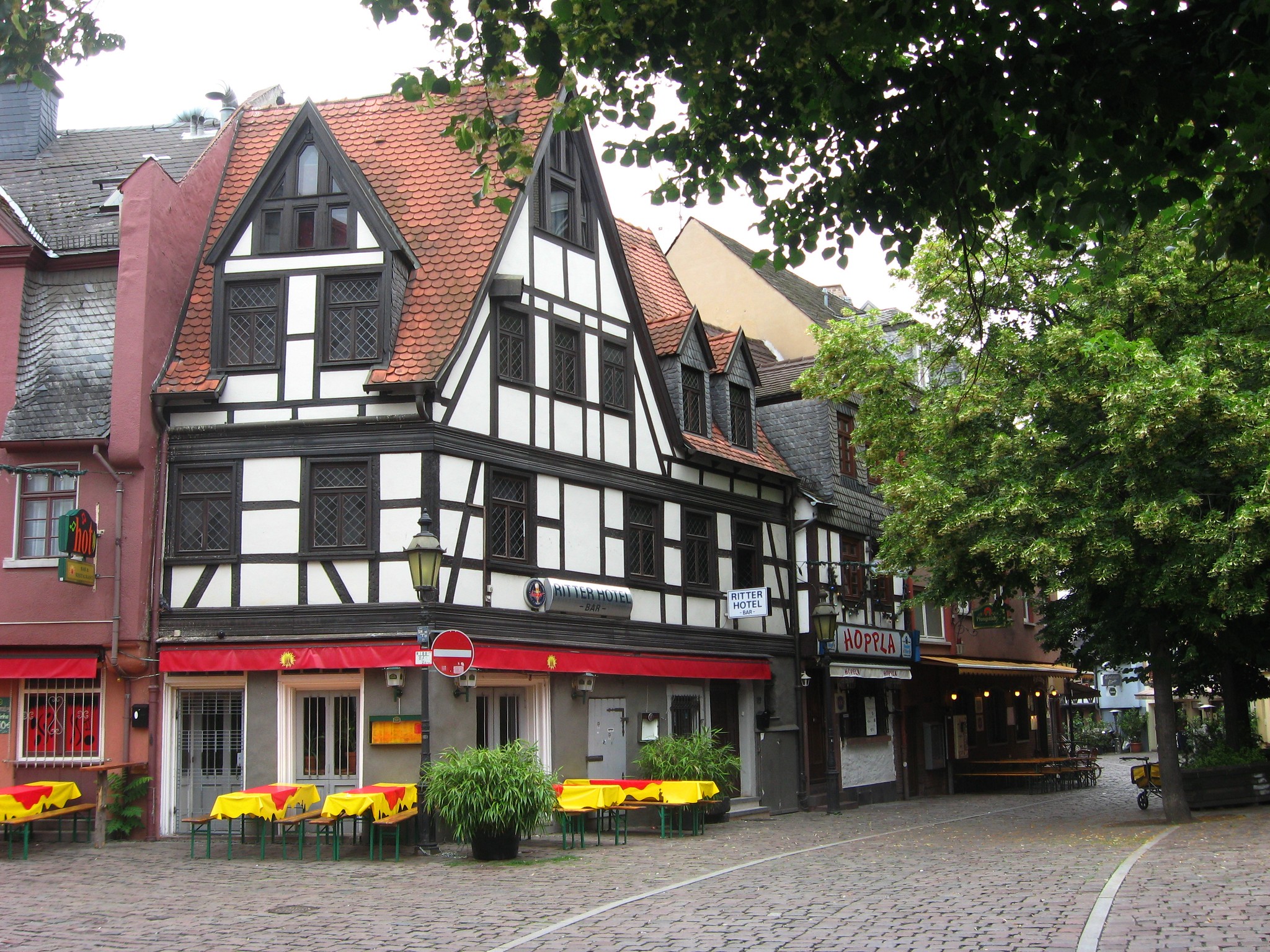
As you wander through Sachsenhausen’s narrow lanes, you’ll be captivated by the well-preserved half-timbered houses that line the streets. These picturesque buildings, dating back to the 16th and 17th centuries, showcase the district’s architectural heritage. The Klappergasse, one of Sachsenhausen’s most iconic thoroughfares, exemplifies this charm, its quaint shops and restaurants inviting exploration.
Art enthusiasts will find plenty to admire in Sachsenhausen. The district has several notable museums, including the Liebieghaus Sculpture Collection and the Städel Museum. The Liebieghaus houses an impressive array of sculptures spanning 5,000 years of art history, from ancient Egypt to neoclassicism. The Städel, one of Germany’s oldest and most respected art institutions, boasts an extensive collection of European art from the Middle Ages to today.
Sachsenhausen doesn’t disappoint those seeking green spaces. Frankfurt’s expansive city forest, the Stadtwald, borders the southern edge of the district. This vast woodland area provides a welcome respite from urban life, offering numerous walking and cycling trails. Nature lovers can also enjoy the scenic Mainufer, the riverside promenade that stretches along the Main River, providing stunning views of Frankfurt’s impressive skyline.
Sachsenhausen truly comes alive at night, particularly along the Textorstraße and Schweizerstraße. These vibrant streets are lined with diverse bars, clubs, and restaurants catering to all tastes. From trendy cocktail lounges to laid-back pubs, the area’s nightlife scene ensures that there’s always something happening after dark.
Throughout the year, Sachsenhausen hosts various events and festivals that showcase its lively spirit. The Apfelweinfestival, held annually in August, celebrates the district’s beloved apple wine tradition. Visitors can sample different varieties of Apfelwein, enjoy live music, and savor local culinary delights. During the festive season, the Sachsenhausen Christmas Market transforms the district into a winter wonderland, with complete stalls selling handcrafted gifts, mulled wine, and seasonal treats.
Sachsenhausen offers several noteworthy sites for those interested in religious history. The Dreikönigskirche (Church of the Three Kings), a striking neo-gothic structure, is a testament to the district’s spiritual heritage. The nearby Deutschordenskirche, a baroque church associated with the Teutonic Order, provides another glimpse into Sachsenhausen’s rich past.
As you explore Sachsenhausen, you’ll discover a neighborhood that effortlessly balances its historical significance with its contemporary appeal. From its traditional taverns and half-timbered houses to its modern art museums and buzzing nightlife, Sachsenhausen offers a multifaceted experience that captures the essence of Frankfurt’s cultural landscape.